The Importance of Hygiene in School

The Importance of Hygiene in School
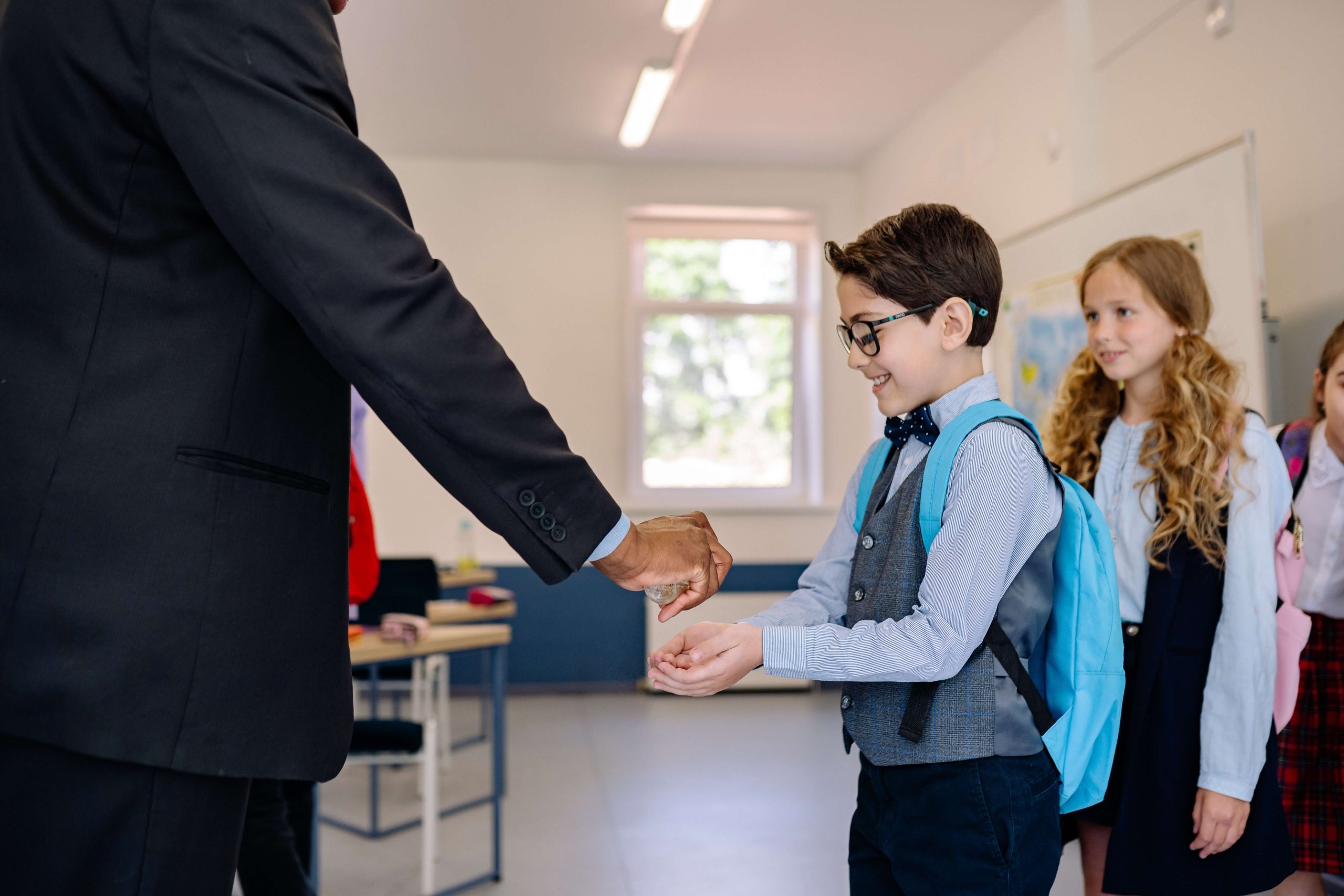
The Covid-19 pandemic had not only impacted the global economy but it changed the way we live our lives and interact with one another. 

Despite all that, the pandemic inevitably opened our eyes towards the importance of hygiene and altered our behaviours and attitudes. People are washing their hands more regularly now more than ever and taking care of their health.

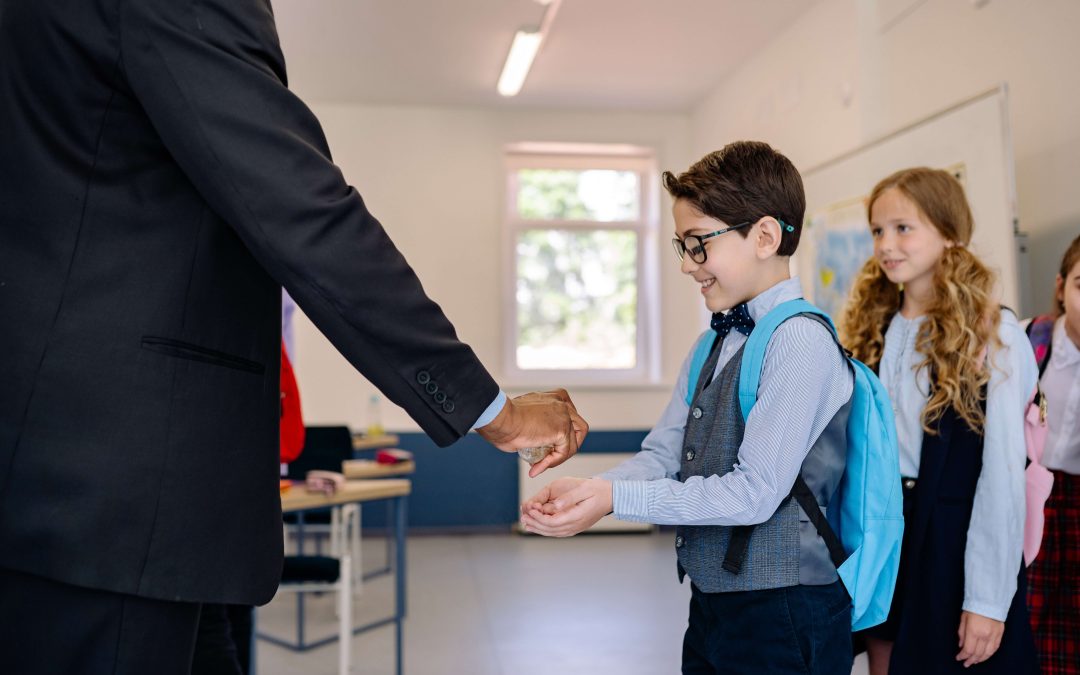
As we move towards normalcy, and schools re-open, we should carry forward these good  hygiene habits to ensure our kids stay healthy and stay safe from illnesses. Schools are a common area where viruses and germs spread viruses amongst kids when they mix with one another, play together and share their food together.


4 Ways To Instil good hygiene habits in kids

Here are some ways to help your kids practice good hygiene habits

1. Wash hands, rinse and repeat

Hygiene starts with washing hands.

It is not surprising that health ministries around the world have emphasised the importance of washing hands as the first step to preventing the spread of germs. Washing hands is the basic hygiene habit that your child should learn as well as knowing when and how to wash their hands properly.

Important times to wash hands

  • Before and after eating
  • After using the toilet
  • After sneezing and coughing
  • After touching pets
  • Before and after cleaning a cut or wound

Follow this 5 important steps to washing hands 

  • Rinse hands with water
  • Turn off the tap and apply soap to your hands
  • Scrub hands with soap at the palms, back of hands, between fingers and fingernails
  • Turn on the tap and rinse your hands well
  • Dry hands with a clean towel or tissue


  1. Start young

We know that good habits develop best when our kids start young. Start by teaching them early on the importance of washing hands, taking showers, and brushing their teeth.Guide them to do these tasks at first when they are around the age of 3-5 years old. 

Make sure you are present while they do these tasks so that you can encourage them if they are doing them well or show them what they can do better. As they get older by 6-9 years old, they should be able to perform their hygiene routines on their own, but make sure to frequently check in on them and give them little reminders.

  1. Make sure their finger nails are always clean

It is a widely known fact that fingernails are a breeding ground for bacteria. The germs that accumulate under your kid’s nails can be easily transferred to their mouth, eyes and nose. This can lead to infection and illnesses in most cases. Ensure that your child’s fingernails are clipped and trimmed every week on a regular basis.

When they are old enough, guide the, to cut their nails through this steps:

  • Trim nails when they are getting long with a clean nail clipper(best to trim after taking a bath)
  • Cut nails straight across while rounding a little at the edges to keep nails strong
  • Cut straight across for toenails as well to reduce the risk of getting ingrowns
  • Filing nails back and forth can weaken nails so remember file in the same direction when smoothing rough edges
  • Avoid pushing back cuticles as they are important in protecting nail roots
  1. Ensure Their School bags and Toys are clean

The two things that your child holds the most are their school bags when they attend school in the morning and their favourite toys when they come home from school. That being said, it would make sense as parents to ensure that these two items are always clean. Kids play with their toys almost everywhere and you would be surprised where they end up putting their toys sometimes (hint: their mouth). 

Moreover, when they share their toys with their friends, germs tend to be transmitted through them. On the other hand, make sure your kid’s school bags are clean without remnants of food, especially if they carry their lunches and snacks in their bags to school. Keeping the items that your kids use on a daily basis clean will ensure that germs and bacteria do not spread easily. Here is a quick guide on how to clean your school bag: 

https://www.swantesttest.edamamedia.asia/how-to-clean-your-swan-bag

Forming good hygiene habits is an essential part of a healthy child growing up. As with other habits, these habits may take time for you kids to follow and develop, but the long-term health investment will be worth the trouble in the end.
5 Ways to Keep Your Kids Motivated to Learn

5 Ways to Keep Your Kids Motivated to Learn

Ever wonder how you can keep your child motivated to learn?

With the right motivation and basic aptitude, your kids can become good learners too. 

Here are 5 tips that can help you motivate your kids to learn.

1. Cultivate a reading atmosphere 

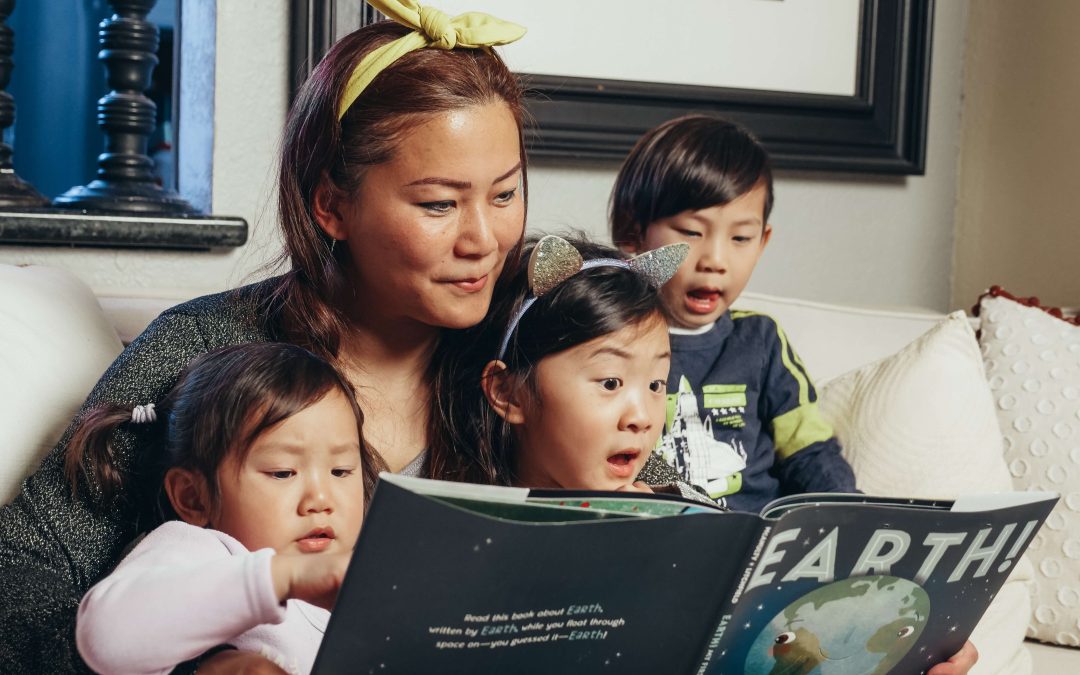
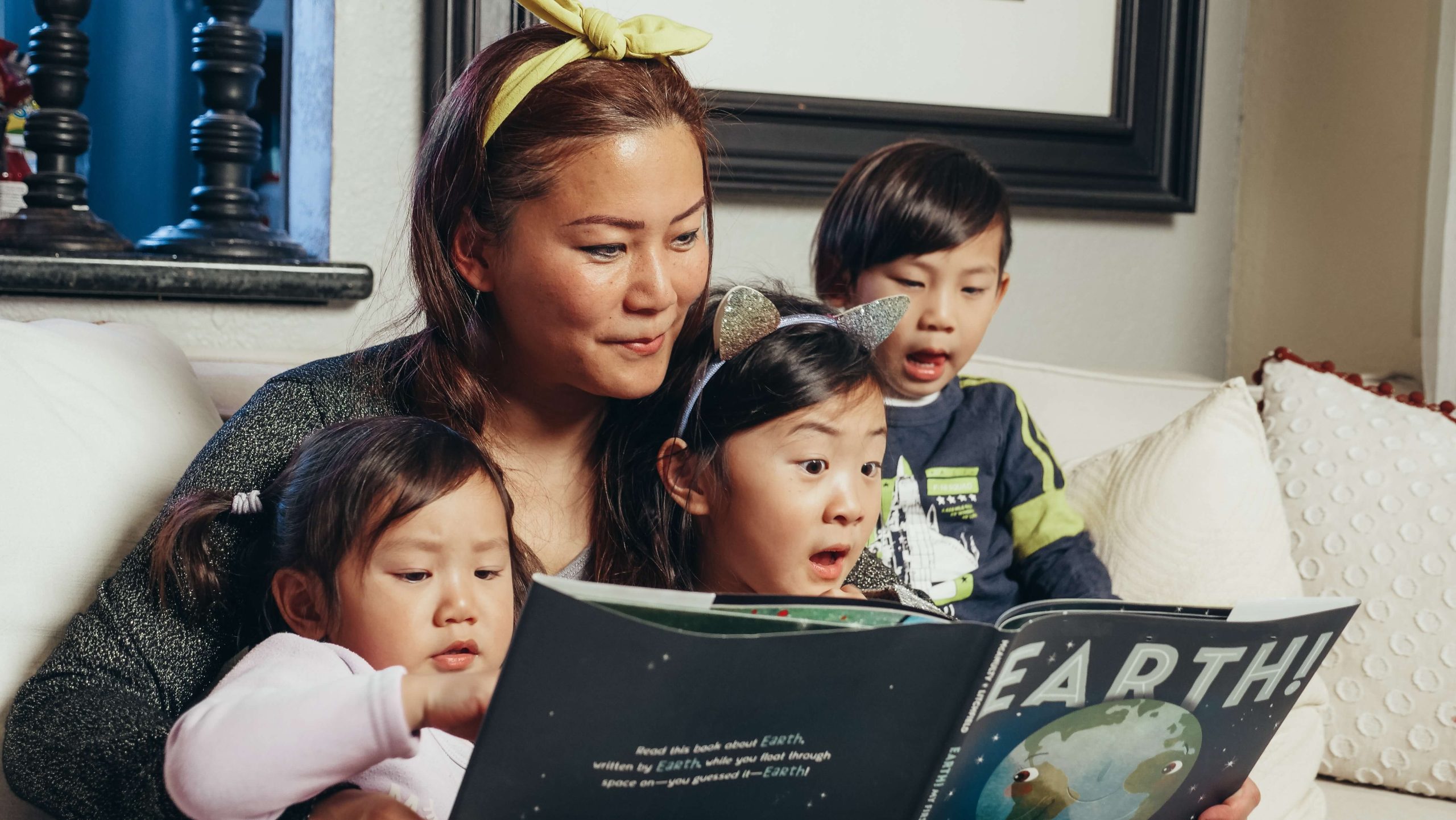
Reading is certainly one of the keys to successful learning. Students who read well tend to learn other things better. 

Your kids may not be an avid reader but it is certainly a skill that can be developed over time with patience. 

Benefits of reading:

  • developing a richer vocabulary
  • mastering the language
  • broadening their perspectives

Cultivate an atmosphere of reading and help your kids develop a love for reading:

  • Start by cultivating a reading habit yourself
  • When your kid sees you reading, they might just mimic you in doing so 
  • Bring your kids to the bookstore every once in a while
  • Allow them to browse and choose books on topics that they are interested in 
  • Set a family reading time 
  • Read to them whenever you can and explain to them what the words mean

Now this is quality time both in bonding and building on knowledge!

2. Find out what your kid’s struggle in 

Children these days tend to get demotivated easily, especially when they start to struggle with certain tasks /activities. 

Here’s what you can consider, although you might not find the solution straightaway:

  • Try to look at things from their perspective and consider steps to help them overcome these challenges
  • Your child might not be understanding the study material
  • Your child might not have self-confidence 
  • The work isn’t suited to their learning style. 
  • Communicate with your kid and give them encouragement to build their confidence

All in all, know that everyone learns differently and there are 7 fundamental learning styles which include Visual, Auditory, Verbal, Physical, Logical (mathematical), Social and Solitary. Your child’s learning style can be either one or a combination of the above.

Take the time and consideration to discover your child’s dominant and supplementary learning style.

3. Give your kids some room

Children these days tend to lose interest and get disengaged when they feel controlled, stifled and do not have a say in what they can do.

We can still allow our kids a certain amount of say and control over their interest and studies by being supportive or merely just showing interest and taking the time to learn about their interests and learning subjects. 

For example, when choosing a book to read or writing an essay let them choose on a topic that they like. And learning does not always have to be constrained to books.

Children learn through activities and play as well. 

4. Process over results

Here’s a reminder to parents all over – process and learning triumph over the result.

The learning process is a journey to behold rather than be obsessed over the destination. 

When your kids are too focused on achieving a certain outcome, they might easily give up when they face setbacks. 

The learning experience itself has its hidden gems.

Try this: 

The next time your kid gets home from school, ask them what they learnt in school instead of how well they did in that math test. 

Let them show, teach and explain to you what they have learnt so far.

5. Help your kids get organised

Organisational skill is something we learn over time and it is not something that will come naturally for most kids.

With modern day demands such as school, activities and all other forms of extra curricular, it is very common where children feel overwhelmed and disorganised. 

Overwhelmed children get frustrated. When they are frustrated, they tend to reject the notion of overcoming challenges or tackle any single task with gusto. What more, there are so many distractions out there to lure them away from these ‘unstimulating’ tasks of organising their own belongings.

Here’s how you can guide your child:

  • Break down bigger tasks into smaller manageable tasks
  • Tackle smaller tasks so that your child can feel a sense of achievement as they go along
  • Plan by setting small gains and timeframe to tackle these smaller tasks

For example, when your child has 4 homework assignments to cover after a long day at school. Firstly, check if these assignments are due immediately (next school day). Prioritise those that are due the next school day.

Go for the quick win – Let them pick the assignment they are most confident / interested in doing first.

All in all, while we are grooming their organisational skills, we are also equipping them with yet another important skill – prioritising.

Why Would You Need An Ergonomic Bag

Why Would You Need An Ergonomic Bag

Our kids commute to and fro from school almost every day. As you have probably noticed, your kids’ backpacks tend to get bigger and heavier each year with the increasing amount of textbooks and workbooks required by schools.

Kids and their bags are almost inseparable and they spend a huge chunk of their time lugging those heavy bags around. Backpacks come in all shapes, sizes and designs to make it appealing to our school kids but might neglect the very fundamentals of a good bag.

This may result in back aches, shoulder pains, neck strains and bad posture when carrying backpacks for long periods of time. Thankfully, ergonomic backpacks are here to save the day.

What is an “Ergonomic” Design?

Products that are ergonomically designed focus on health, comfort and efficiency. An ergonomic backpack encompasses weight distribution, how the bag fits on your back and shoulders and eliminates unnecessary pressure on the back.

Here’s the Real Problem

Although there isn’t a study that proves carrying heavy backpacks lead to scoliosis, there are a myriad of backpack related health problems. With the aid of MRIs scans, a 2014 study showed that kids with back pain and heavy backpack loads suffered disc compression in their lower backs, leading to painful problems as they age.

In 2010 another study reconfirmed that kids with heavy backpacks experienced disc compression coupled with lumbar asymmetry or lower back curvature, while another study conducted in Poland found that heavy backpacks can alter a young person’s spine shape.

According to Tel Aviv Researchers, heavy backpacks carried by kids in their formative years have the potential to damage soft tissues of the shoulder, resulting in microstructural damage to the nerves. This can cause minor irritation, but in worst cases cause nerve damage inhibiting hand movement and leading to fingers dexterity.

Here’s How An Ergonomic Backpack can Protect Your Spine

Carrying an ergonomic school bag can be beneficial in building bone density and promoting spinal health.

Here’s 4 things to look for in an ergonomic backpack.

1.Proper Height and Adjustable Straps

Firstly, in terms of height and torso length, an ergonomic backpack should be well fitted. According to a senior physiotherapist at the Singapore General Hospital, Jennifer Liaw, the ideal height of a backpack should rest between the C7 vertebrae and the top of the hip bone.

Thus, an ergonomic backpack doesn’t just come in terms of material but also by choosing the right size.

For example, some backpacks are designed for kids within the 150cm height range while others are meant for those who are 170cm in height and above.

Choosing the right backpack that is suited to your kid’s height is as important as the option of adjustable straps.

2. Thick and Comfortable Straps for Better Support

Most of the weight of the bag is carried on the shoulders. Thus it is important that an ergonomic bag have thick and comfortable straps such as the SWAN EASY PAC for better support.

This will make the bag more comfortable and prevent any strains or pains on their shoulders. A thinner strap with less padding will exert pressure on their shoulders which can damage their nerves.

3. Multiple Compartments to Distribute the Weight Evenly

Although an ergonomic backpack provides multiple compartments for your kids to store more items. The main purpose is to ensure that weight is distributed evenly. Heavier items should be packed closer to the backrest while the lighter items towards the outside.

Packing items unevenly into just one compartment can cause imbalance in weight distribution and affect overall posture. Signs of imbalances can be seen when your kid’s tend to lean forward while carrying their backpacks.

Thus, weight that is distributed evenly will promote a better standing posture and ensure spinal health. The Swan Orgin Metal Pac provides multiple and spacious compartments to help pack your backpack strategically and ergonomically for spinal health.

4. Padded Back Rest for Spinal Cushioning 

Ideally, an ergonomic backpack is readily equipped with a padded backrest for spinal support cushioning. A properly padded backrest embraces the spine to ease stresses from carrying the backpack load promoting spinal health.

The Swan Ergolite takes it a step further with an ergonomically designed ventilated back padding making it more breathable and providing that extra layer of comfort.

5. Strong Base

Additionally ergonomic backpacks should come with a strong base to support the weight of the load.This prevents the backpack contents from moving around in different directions and tilting the overall balance of the backpack.

After all, without a strong base other ergonomic features would be factored out. Rest assured,SWAN Ergonomic bags ensurethat backpack weight be carried evenly across your kid’s shoulders,back and waist

How to properly carry your school bag and why?

How to properly carry your school bag and why?

The modern day backpack is certainly one of the most useful items invented. We use it on a daily basis,
especially in schools.

From our textbooks to stationeries and water bottles, our school bag helps us carry everything we need wherever we go.

While choosing the right school bag is important, it is also necessary to know how to properly carry them because if done incorrectly can lead to back problems. Carrying with poor posture (normally an indication of a backpack that is too heavy) can lead to improper alignment of the spine. When this happens our spinal discs may not be able to absorb shock as they should, leading to injured joints and muscles in our back, shoulders and neck. In some cases, it can even cause nerve damage.

How Can I Tell If My School bag is a Problem?

You should reduce the weight of your school bag if:

  • You tend to lean forward or backward while carrying your bag
  • It takes a great deal of effort to put on or take off your bag
  • You have backaches

Here’s some Tips for Parents

Parent should look out for these signs:

  • Ask your child to inform you if they feel any numbness or tingling sensation in their arms or legs
  • Observe how your child puts on and takes off their backpack to see if they struggle in doing so.
  • Do not ignore backpain in your child or teenager

How to carry your school bag properly
Do not carry more than you need

The best indicator of how much to carry is to not exceed 10-15% of your body weight. For example, if you weigh 40kg, your backpack shouldn’t weigh more than 4-6kg. Use lockers in school throughout the
day instead of carrying a full backpack if possible.

Pack Strategically

Remember to pack the heaviest item closest to your back and use all the compartments including the side pockets instead of just using the main compartment. This will evenly spread the weight out to prevent any imbalances.

Avoid carrying with one shoulder.

While it may be cool to carry your backpack over one shoulder, backpacks are designed to be carried
over both shoulders to ensure weight is distributed evenly and reduce the risk of strains and injury.

Ideally, backpacks with padded shoulders are the safest bet to ensure comfort and prevent the weight
from digging into your shoulder, causing back pain and muscle spasms. The Swan TXP Prime Backpack provides a thick padding strap that will rest comfortably around your shoulders.

Carry at the right height

The height of the backpack matters, too. If the backpack is too low, the shoulders tend to carry more
weight. According to the American Academy of Orthopedic Surgeons the ideal height is a backpack that
hangs two inches above the waist for an optimal fit.

Consider getting a backpack on wheels for younger children

Investing in a trolley bag may be a good option if you have to carry many books to school. This will reduce a significant burden off your shoulders. If difficulty in going up and down stairs is a concern, there are trolley bags with multiple built-in wheels to conquer stairs and rocky surfaces with ease such as the Swan School Bag Techno Lite Spinal Protection Back Support.

Pick up your backpack the right way.

Carrying a heavy backpack the wrong way for too many times can lead to back injuries. Similarly to any heavy weight, make sure to bend both knees before lifting and carry with both hands to your shoulders.

Strengthen your core

Additionally you can strengthen your core. Strengthening muscle in your torso, lower back and abdominal muscles is a good way to prevent back injury. Weight training, cycling, swimming, and yoga are good ways to strengthen your core muscles

What makes a Good School Bag!

What makes a Good School Bag!

Ergonomic Design

Given the choice, most kids will be more interested in choosing their favorite cartoon character design or color or overall aesthetic appeal of the bag.

As a parent, we’d be looking at other more ‘practical’ aspects-such as durability, size and more importantly-how ergonomic is the bag in question.

In other words, an ergonomic design encourages a lifelong good standing posture for your kids. While carrying a light load such as a backpack is good for your kid to promote good skeletal development in their early growing stages, carrying a backpack that is too heavy or not ergonomically designed can cause imbalances that will eventually lead to poor posture, muscle pain and strains on their back, neck and shoulders. 

A good ergonomic school bag can be identified by having a thick and comfortable back padding, shoulder straps lined with thick sponge, and additionally a U-shaped shoulder straps that support and ensure optimum weight distribution such as the Swan Ergolite Ergonomic Spinal Protection Bag.

Quality

Choosing the right school bag means looking at quality over quantity. A good quality school bag will benefit you in the long run because it can last up to many years.

To add to this, most reputable brands provide warranties for several years that will keep you in good standing to maintain the bag.

Good school bags have high quality fabric and stitching that make them durable enough to handle all those heavy textbooks and the standard wear and tear-basically children being children.

While zippers are often overlooked, they are one of the most used features of a backpack. Low quality zippers tend to break easily and this makes it a hassle to get them replaced. You wouldn’t want to throwaway a perfectly working bag just because you can’t zip up a certain compartment, right? So, zippers do matter!

Thick paddings on the back are also important to protect the contents of the bag and provide comfort for the one carrying the bag.

Versatility

We know that your kid’s school activities are not only limited to classrooms but they also have extra-curricular activities after classes. Choosing a versatile bag saves you the headache of having to fit materials for different occasions such as classroom learning, sports activities, as well as a leisure bag to bring out.

A versatile bag is one that is spacious and has multiple compartments, waterproof and a neutral color that is suitable for every occasion. A good example of a versatile backpack would be the Swan TXP Prime Backpack.